In Today's Issue:
❣️ Ditching Male-Centric Science for Truth.
🥳 EPDS: Beyond the Checkbox (the Edinburgh Postnatal Depression Scale).
🌍 We Just Leveled Up—Come See the New Website!
✅ Advancing Your Expertise
I was recently looking for a new study I had found on the connection between mental health and nutrition but somehow lost track of. And by the grace of God, it struck me: I need to stop seeking validation from a field that has care so little for women.
For too long, research has been designed around male bodies—leaving us to navigate a wild guessing game when it comes to nutrition and mental health (and really, all things female related).
Historically, our complex hormonal cycles were seen as “too complicated” to study, and conditions like postpartum depression and mental health concerns were dismissed as “hysteria” (a term rooted in the word uterus).
This legacy of neglect has left alarming gaps in our understanding: up to 80% of women enter postpartum depleted of vital nutrients like magnesium, vitamin D, B vitamins, and omega-3 fatty acids—essential elements deeply linked scientifically in males to mental health disorders. Meaning depletion of even one nutrient mimic the symptoms of depression and/or anxiety.
Yet, all too often, mental health diagnoses overlook these deficiencies. It’s nothing short of a travesty to label someone with postpartum depression/anxiety without first investigating the very building blocks of her well-being.
But here’s the truth: we know this deep connection intuitively. For generations, our bodies carried the wisdom of nourishment and healing—a knowledge sidelined by a one-size-fits-all medical model.
Today, we as providers and advocates of Postpartum University® are reclaiming that lost wisdom. We’re challenging outdated research paradigms and demanding that our mental health practices reflect the unique needs of women.
So, what can you do right now?
- Integrate Nutritional Evaluations: Make it a standard practice to assess nutrient levels and toxin exposure in every postpartum mental health evaluation and general check-up visit.
- Educate & Empower: Share with your clients the critical role that nutrients like magnesium, vitamin D, B vitamins, and omega-3 fatty acids play in mood regulation (just give them our handout guide!).
- Advocate for Change: Push for and support research that centers on women’s biology. Collaborate with nutritionists and holistic practitioners who understand these vital links.
- Build a Holistic Toolbox: Supplement your practice with nutritional care, mindfulness practices, and lifestyle adjustments that target root causes, not just symptoms. Get educated on the topics so you can help your clients even more.
Every step you take toward a more individualized, nutrition-based approach isn’t just good practice—it’s life-changing.
True healing begins when we honor the intricate, irreplaceable link between nutrition and perinatal mental health. It’s up to us to lead this charge for the future of women’s health, reclaiming the wisdom our ancestors knew and that our bodies have always held.
Together, we can transform postpartum mental health—and change lives for the better.
EPDS: Beyond the Checkbox
Let's be blunt—the Edinburgh Postnatal Depression Scale (EPDS) is touted as a gold standard, yet all too often it barely scratches the surface.
In our latest podcast episode, I unpack real stories from mothers who ticked all the right boxes on a 10-question form but still felt utterly invisible. One mom told me, "I answered every question, but I didn’t feel like they truly captured what I was going through."
And that’s exactly the problem: a checklist might flag potential issues, but it doesn’t capture the raw, messy reality of postpartum mental health. As providers, we can’t let a form dictate care. We must build genuine, trusting connections that go beyond data points—equipping ourselves with holistic tools that truly support our moms. Tune in now for actionable insights on bridging this critical gap.
Listen Here: https://postpartumu.com/does-the-edinburgh-postnatal-depression-scale-really-work-ep-202
🌍 We Just Leveled Up—Come See the New Website!
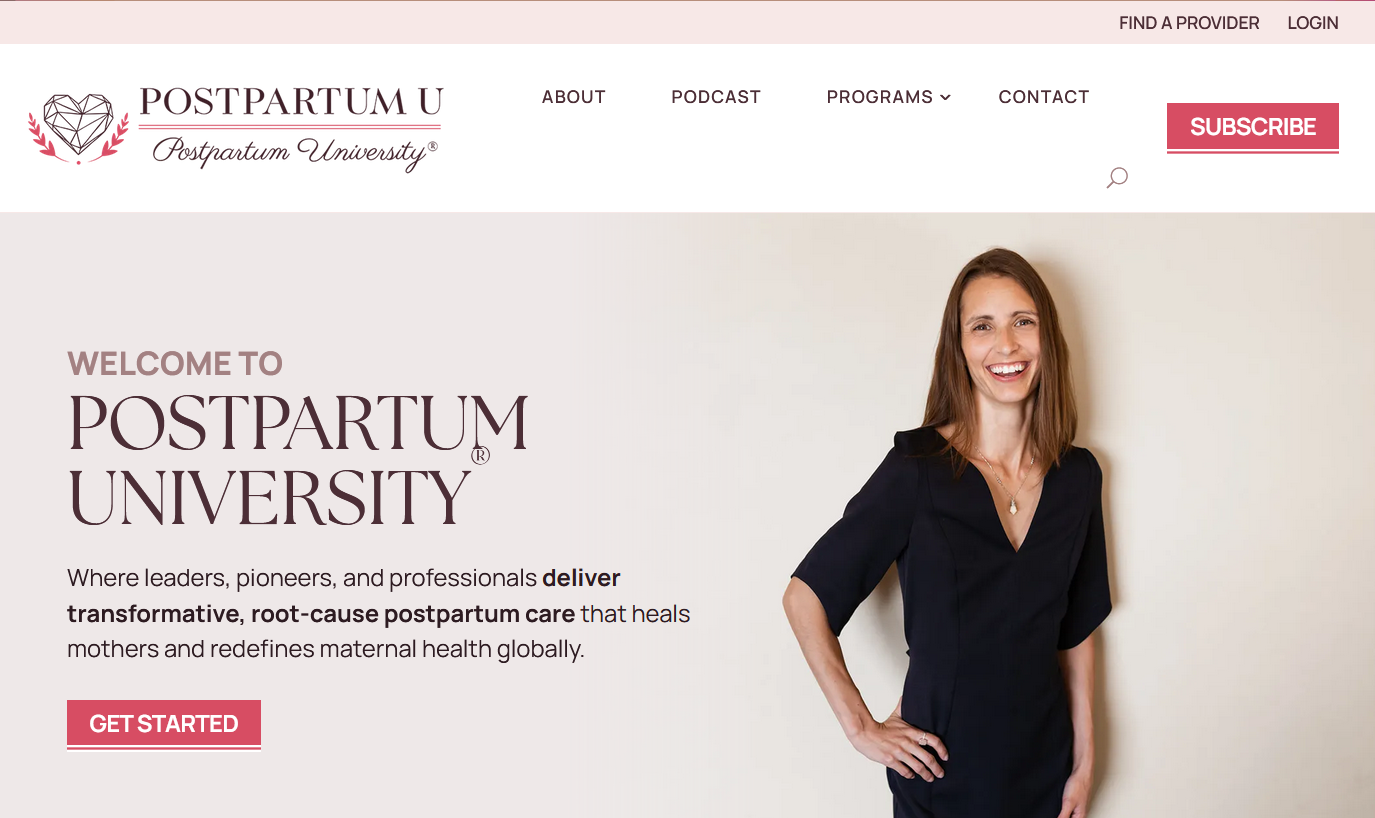
Our brand-new website just dropped! 🎉
From the fresh design to the revamped writing (and everything in between), it’s an entirely new experience—and I can’t wait for you to check it out.
Go take a peek and let me know what you think!
👉 www.PostpartumU.com
✅ Advancing Your Expertise
Your commitment to reshaping postpartum care is already inspiring, and now it’s time to take your work to the next level.
Becoming a Certified Postpartum Nutrition Specialist is the natural next step in your journey—a way to deepen your expertise and expand the transformative support you provide.
Our next cohort opens exclusively to our waitlist on March 4th at a discounted rate, with only 30 seats available on a first-come, first-served basis (an note, there's nearly 1000 people on the waitlist!). If you’re not already on the waitlist, make sure you join now to secure your spot and continue leading the change in women’s health ->
Waitlist for the Postpartum Nutrition Certification Program
We’re not afraid to challenge outdated paradigms and demand the holistic care our mothers deserve. Every step you take to integrate true nutritional wisdom into postpartum mental health is a step toward a healthier, more empowered future for women. Stay inspired, stay bold, and if you’re ready to elevate your practice even further, don’t forget to join our waitlist. Let’s keep changing the narrative, one life at a time.
With Love,
Maranda Bower
CEO & Founder of Postpartum University®
www.PostpartumU.com